

Quick Takeaway: “Digital Arrest” and fake parcel-seizure calls fool doctors, engineers, and executives not because victims are gullible, but because scammers combine cheap visual props—taped-up posters, half-uniforms, and looped police-radio audio—with strict “do not hang up” isolation that triggers acute panic before rational thinking kicks in.
Every week, a new headline makes people shake their heads over morning tea:
- A retired surgeon wires away his entire life pension during a three-hour video call.
- A software engineer locks herself inside a hotel room while strangers watch her through her phone camera.
- A university professor empties two fixed deposits into a “central bank verification account.”
Whenever we read those stories, our first reaction is comfortingly confident: “How could an educated person possibly fall for a fake police video call? I would hang up in five seconds!”
Not necessarily—not if they caught you sleep-deprived in the middle of a hectic Tuesday. Modern “Digital Arrest” and courier-customs scams aren’t clumsy prank calls. They are tightly rehearsed psychological theatre performed inside cheap bedroom sets engineered to short-circuit the rational part of your brain.
Here is what is actually sitting three feet behind the scammer’s webcam—and how a $5 vinyl poster and a YouTube sound loop trap smart people in 20 minutes flat.
Inside the $20 Scam Studio: Gym Shorts, Flex Banners & YouTube Sirens
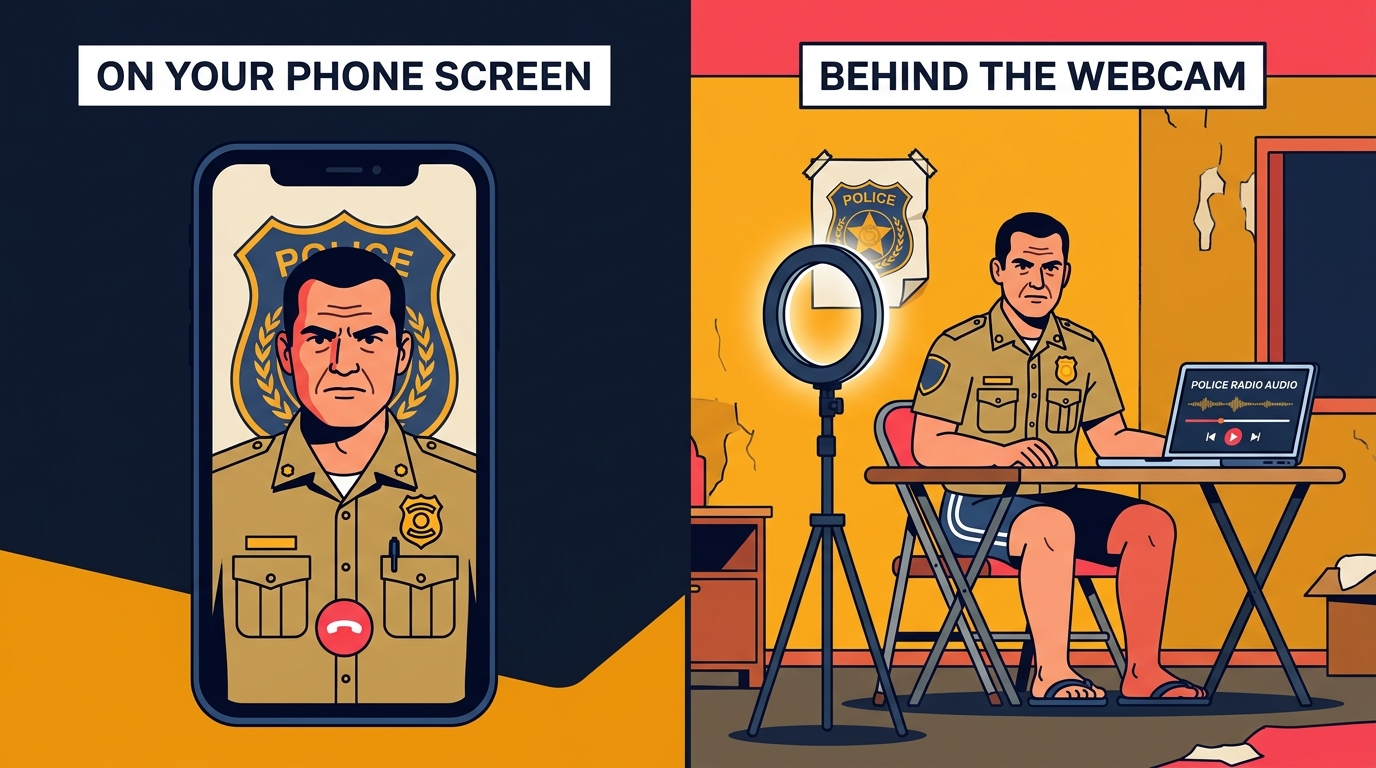
When victims recount the call afterward, they almost always mention the same details: “It looked like a real headquarters. I saw the official crest on the wall, heard police walkie-talkies crackling in the background, and saw my real ID number printed on a stamped PDF warrant.”
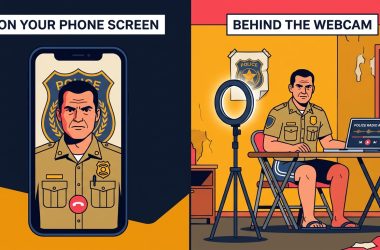
Pull the camera back three feet, and the terrifying “interrogation room” turns into pure farce.
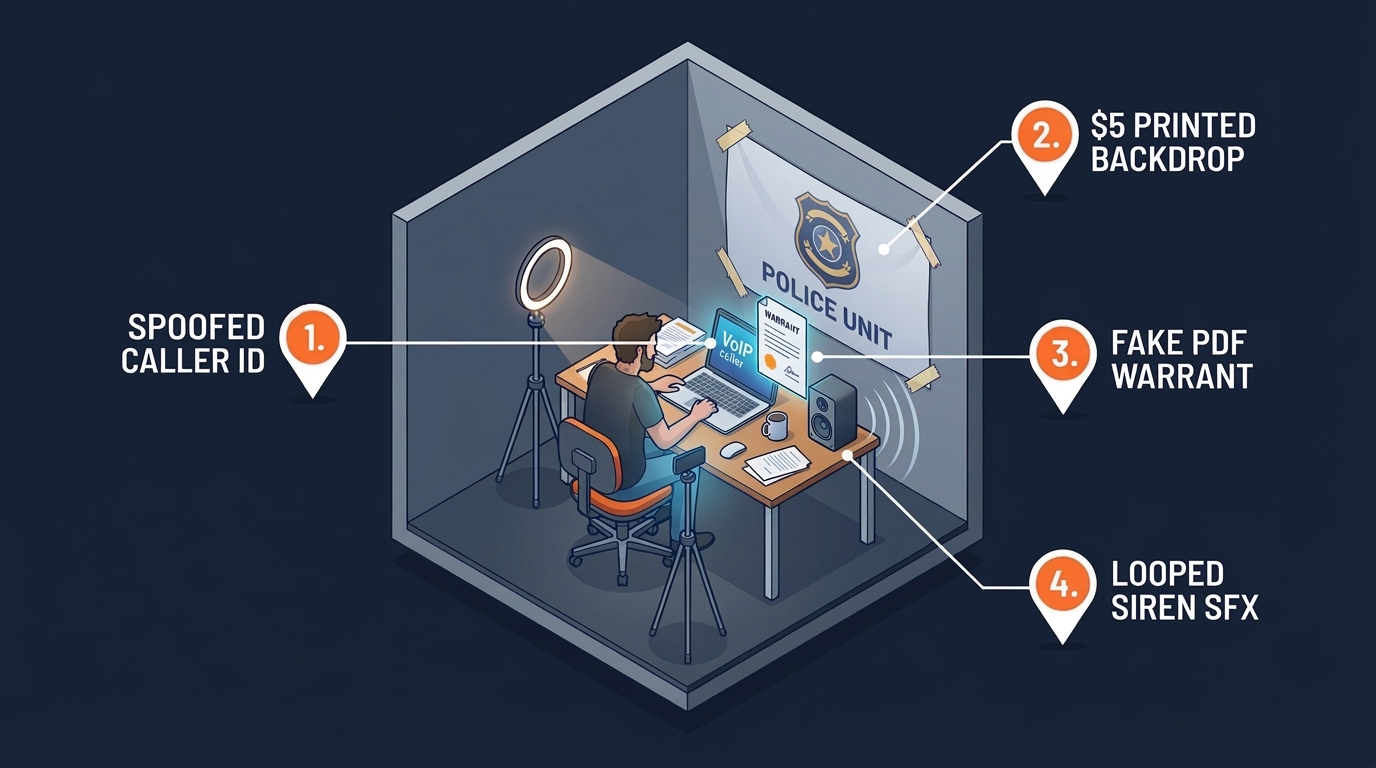
- Half a Costume Uniform + Gym Shorts: Operators wear a cheap khaki shirt from the chest up—paired with gym shorts and rubber flip-flops underneath a folding plastic table.
- A $5 Printed Wall Banner: Tightly cropped behind a tripod ring light on a 6-inch mobile screen, a wrinkled vinyl crest taped to a bedroom wall looks startlingly official.
- Looped Background Ambience: That authentic crackle of police radios, rubber stamps, and office chatter? It is literally a two-hour “Police Station Ambience SFX” audio file looping on a second laptop beside the microphone.
- 15-Second Mail-Merge “Warrants”: Using old leaked KYC or telecom spreadsheets, an operator pastes your name and phone number into a Photoshop warrant template with stolen seals and drops the PDF into your WhatsApp while you are still talking.
The 20-Minute Brain Hijack: Why Smart People Don’t Press Hang Up
If the props are that flimsy, why don’t seasoned professionals spot the cracks right away?
Because the script triggers a well-known neurological response called Amygdala Hijack. When you are suddenly linked to a serious crime—and immediately offered a “helpful” way to prove your innocence—adrenaline floods your brain before slow, sceptical fact-checking can catch up.
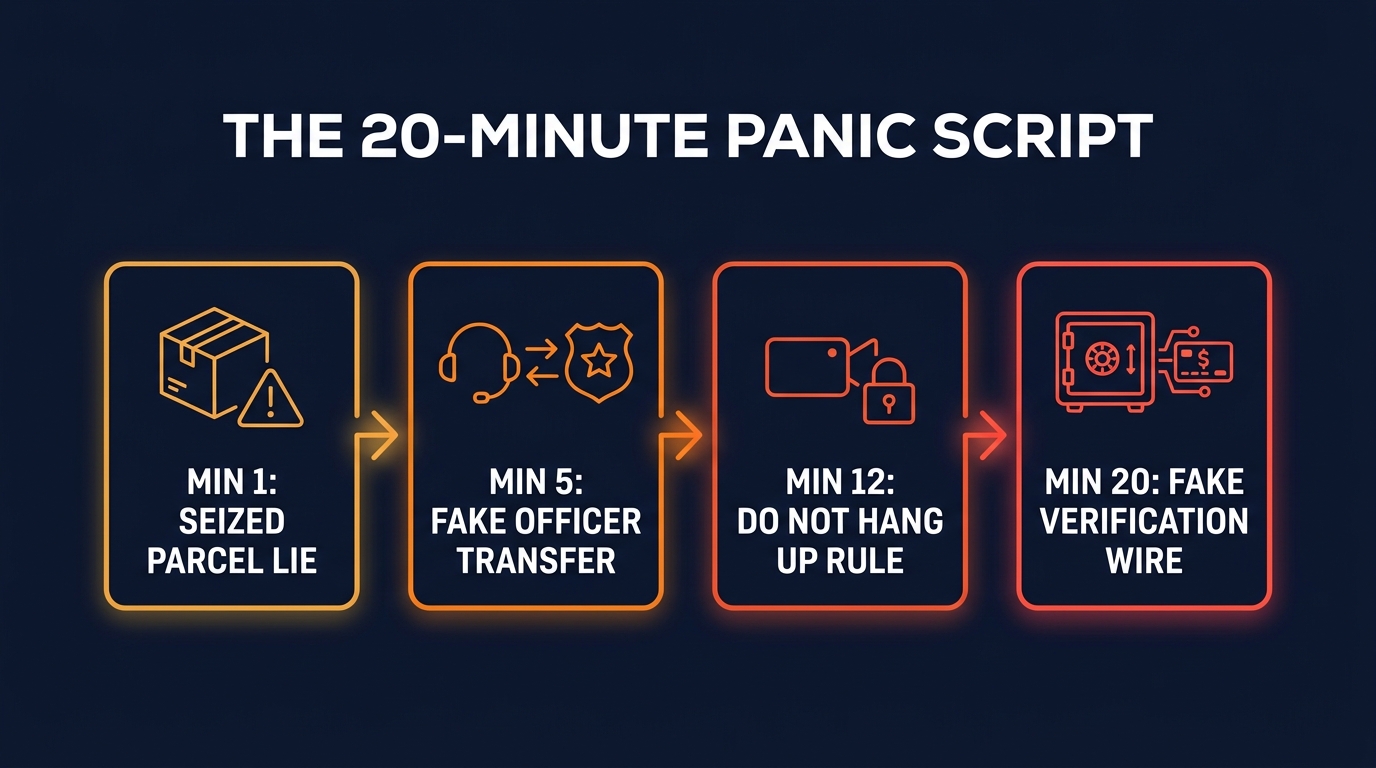
- Minute 1 — The Sympathetic “Identity Theft” Opener: Notice they rarely accuse you outright at the start. A fake FedEx, DHL, or telecom agent says a parcel booked under your name and mobile number was seized at customs with illegal items. When you say “I never sent any parcel!”, they sound helpful: “Oh no, criminals must have stolen your ID! Let me transfer your call to Cyber Crime right now so you can log a protection report.”
- Minute 5 — The Fake Rescue Transfer: Because you just asked for help clearing your name, your psychological guard is down when the “Senior Officer” appears on camera. Your brain frames the scammer as your ally, not a stranger cold-calling for money.
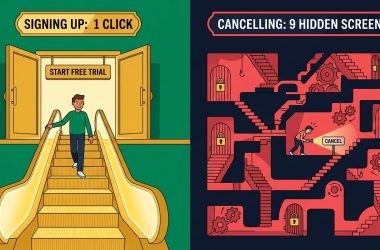
- Minute 12 — The Isolation Cage (“Do Not Hang Up”): Suddenly they claim your ID is tied to money laundering under a “National Secrecy Act” and issue their golden rule: “Stay on camera, close your room door, and tell nobody—not even your spouse—or local officers will arrest your family.” Why? Because scammers know a single 30-second chat with a calm family member shatters the spell instantly.
- Minute 20+ — The “Refundable Audit” Transfer: They don’t ask for a bribe. They instruct you to temporarily wire your funds to an “Official Court / Central Bank Verification Account” so software can confirm your savings are legal and “return 100% within 45 minutes.” Once the bank wire clears, the screen goes black forever.
Send This Card to Your Family Tonight: 4 Rules Real Authorities Never Break
Once adrenaline hits, willpower alone fails—only pre-learned rules protect people. Forward these four unbreakable truths to parents, grandparents, and busy friends:
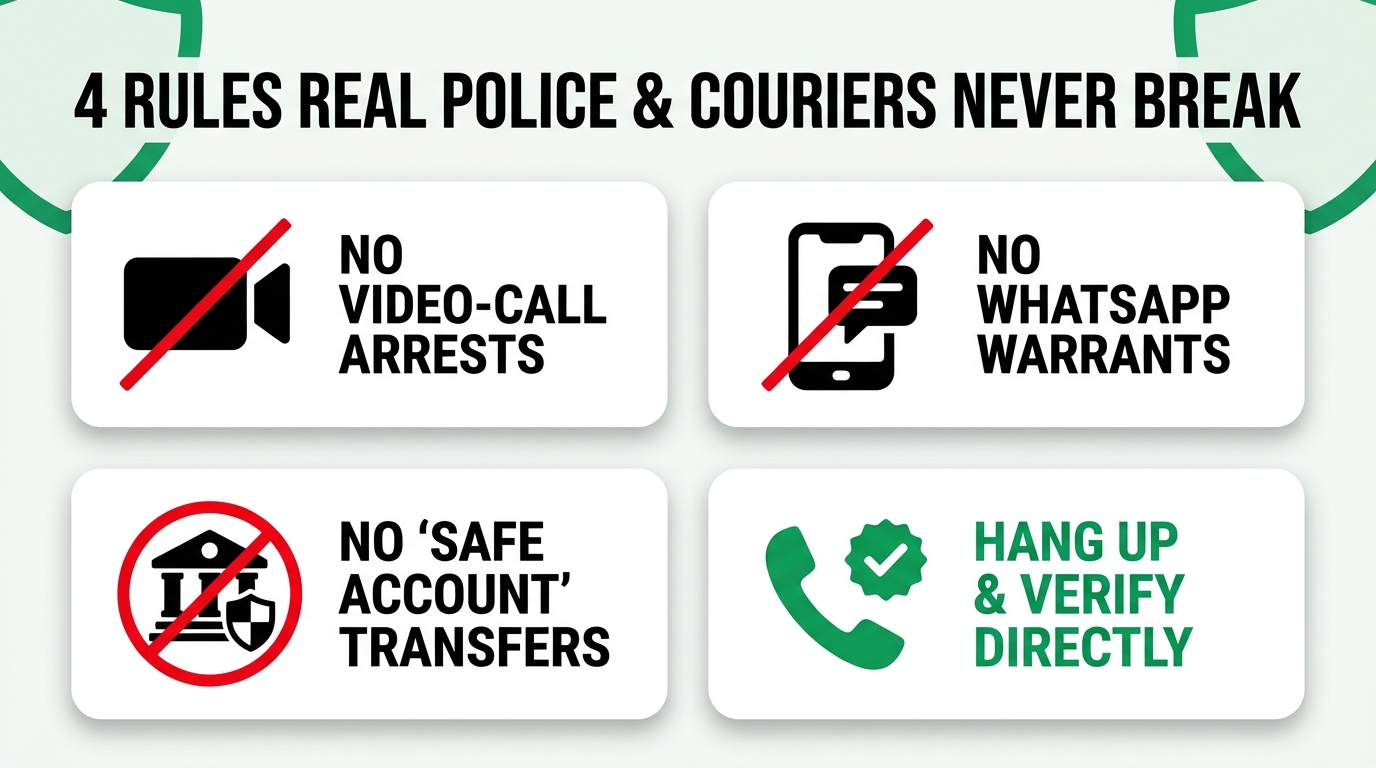
- “Digital Arrest” is 100% fictional: Police, customs, tax agencies, and courts never interrogate suspects, place people under house surveillance, or grant bail over WhatsApp, Skype, or Zoom video calls.
- Real warrants never arrive as chat PDFs: Official summonses are served in person or via verified government portals—never messaged from a random mobile number.
- There is no such thing as a government “Safe Verification Account”: No court or central bank will ever ask you to transfer money out of your own bank account to “verify” it and send it back.
- Secrecy orders prove it’s a scam: Real authorities allow you to consult a lawyer or family member. Anyone forbidding you from hanging up for two minutes is running a confidence trick.
The 60-Second Circuit Breaker: If an unknown caller mentions a seized parcel, SIM disconnection, or cybercrime warrant, hang up mid-sentence. Call a trusted relative first, report fraud to your official cyber helpline (1930 in India), and if you want to check where the suspicious call actually originated—such as an internet VoIP line vs. a domestic carrier—inspect the digits quietly with a free Reverse Phone Lookup.