Quick Takeaway: Polite “wrong number” WhatsApp messages—like “Hi Rakesh, is the package ready?” or “Are you the yoga teacher?”—are rarely accidental typos. Replying “Sorry, wrong number” alerts an automated bait bot that your account is active and hands your chat straight to a human psychological grooming desk.
It starts with the most harmless-looking message on earth.
Your WhatsApp pings on a quiet evening from a number you don’t recognize:
- “Hi Rakesh, did the interior designer drop off the keys yet?”
- “Hey! Are you the yoga instructor Sarah recommended?”
- “Hello Dr. Mehta, confirming my dog’s vaccination at 5 PM tomorrow.”
You tap their profile picture. It looks completely ordinary—maybe a smiling young professional at a café, a sunset travel photo, or someone holding a golden retriever.
Being a decent human being, you don’t want a stranger waiting around for keys or a vet appointment. So you type five polite words:
“Sorry, you have the wrong number!”
Within ten seconds, typing... appears.
“Oh gosh, I am SO sorry to disturb you! My assistant must have typed one digit wrong. Thank you for being so kind—most people just ignore me! Have a wonderful week 😊 By the way, I’m Elena…”
You think you just bumped into a polite stranger by accident. In reality, you didn’t reply to a confused person at all—and those five polite words just moved your chat window onto a multi-million-dollar industrial assembly line.
You Didn’t Reply to a Stranger. You Triggered a 3-Stage Factory.
Cybercrime investigators call this global operation “Pig Butchering” (translated from the phrase Sha Zhu Pan—fattening up a target with weeks of friendly conversation before the financial sting).
What surprises almost everyone who sees inside these operations is the strict assembly-line division of labor. The system that sent “Are you the yoga teacher?” and the person chatting warmly with you ten minutes later aren’t even the same operator.
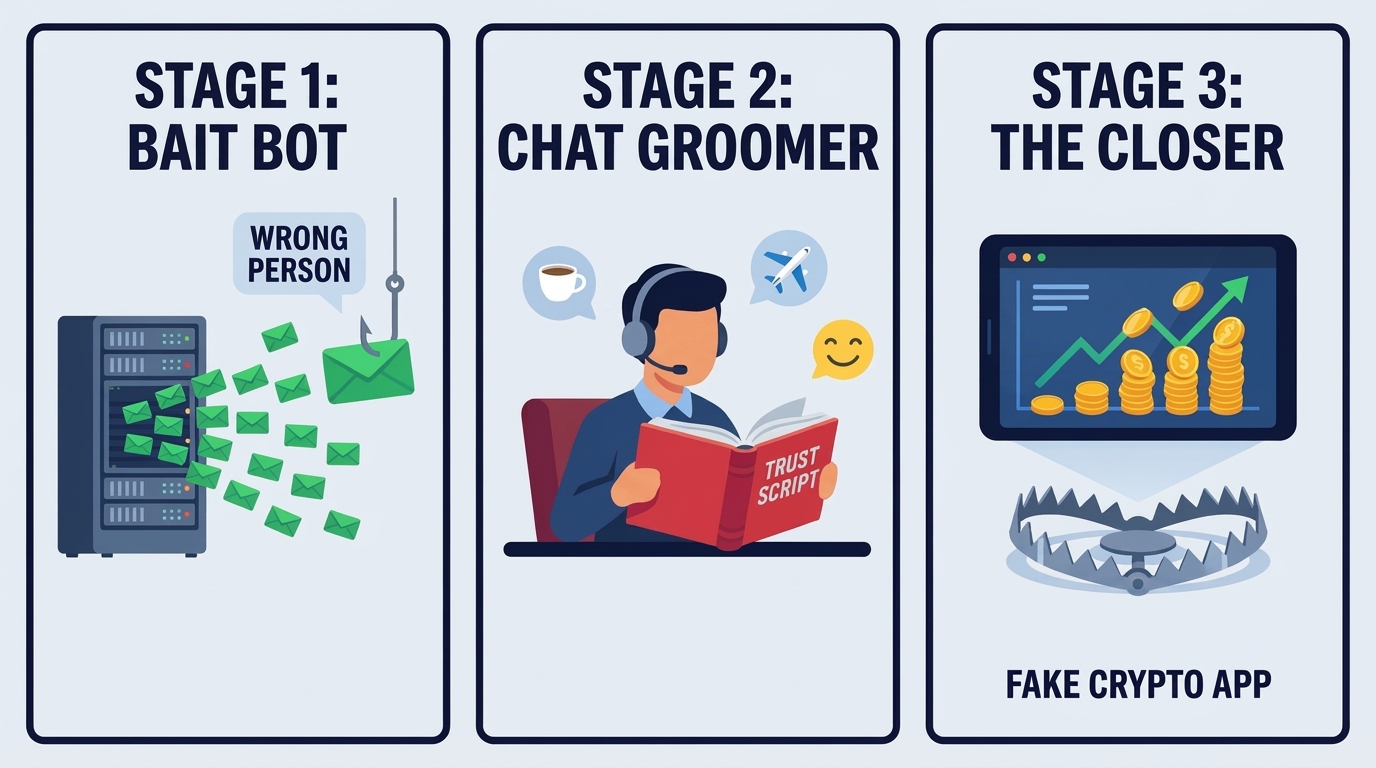
- Stage 1 — The “Opener” Bait Bot: Automated software uses bulk virtual SIMs and VoIP numbers to blast 50,000+ fake wrong-number errands every morning. Why mundane errands instead of “Want to earn ₹10,000 today?” Because WhatsApp’s spam filters flag obvious promos—and polite, empathetic humans feel a natural urge to correct an innocent mistake.
- Stage 2 — The “Groomer” Desk: The instant you reply “Wrong number”, the bot steps aside. Your live conversation pops onto a shared CRM screen in front of a trained human Chat Groomer equipped with folders of stolen lifestyle photos, pre-recorded voice notes, and a thick psychological script binder.
- Stage 3 — The “Closer” Team: Once you trust your “accidental friend” after days or weeks of casual small talk, veteran closers take over the keyboard to introduce a rigged crypto platform, gold-trading app, or fake e-commerce task dashboard.
The 14-Day Mind Game: Why They Never Ask for Money on Day 1
Old-school scammers failed because they rushed—asking for an OTP, gift card, or bank transfer in the first five minutes immediately sets off alarm bells.
Wrong-number syndicates play the exact opposite game. In fact, if you ask about money too early, they are trained to change the subject.
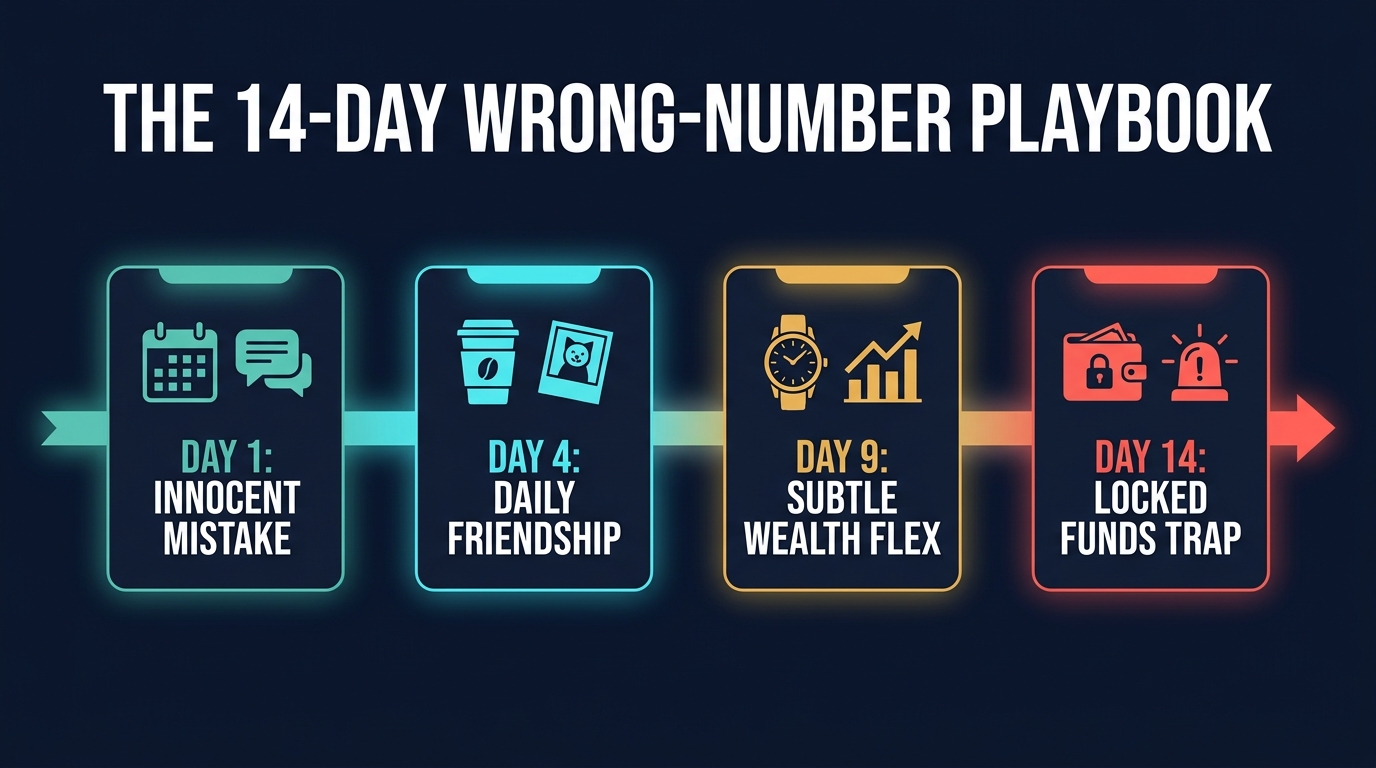
- Days 1–2 (The “Fate” Pivot): “What a funny coincidence—acquaintance is fate! Which city are you in?” They usually claim to run an upscale small business (jewelry design, boutique fashion, wine import, or interior architecture) in a major hub like Singapore, Dubai, London, Mumbai, or Bengaluru.
- Days 3–7 (Daily Mirroring): Unhurried good-morning texts, photos of their coffee or home-cooked dinner (pulled from curated folders of lesser-known overseas social media creators), and thoughtful questions about your work and family.
- Days 8–11 (The Casual Wealth Glimpse): Never a hard pitch—just a passing mention: “Sorry for replying late! My aunt’s quantitative analyst spotted a short crypto/gold window and I just closed a quick $4,200 trade before dinner.” They wait patiently until you ask how it works.
- Days 12–14+ (The Real-Withdrawal Bait): When you test their slick trading link with $100 (₹8,000), they actually let you withdraw real profit straight into your bank account on your first trade. Seeing real cash arrive melts your skepticism—right before you deposit larger savings into a dashboard whose numbers are completely controlled from a scammer’s admin screen.
4 Dead Giveaways That Expose Any “Wrong Number” Trap in 10 Seconds
Once you know the assembly-line script, you can spot these traps effortlessly—even when the grammar and photos look spotless:
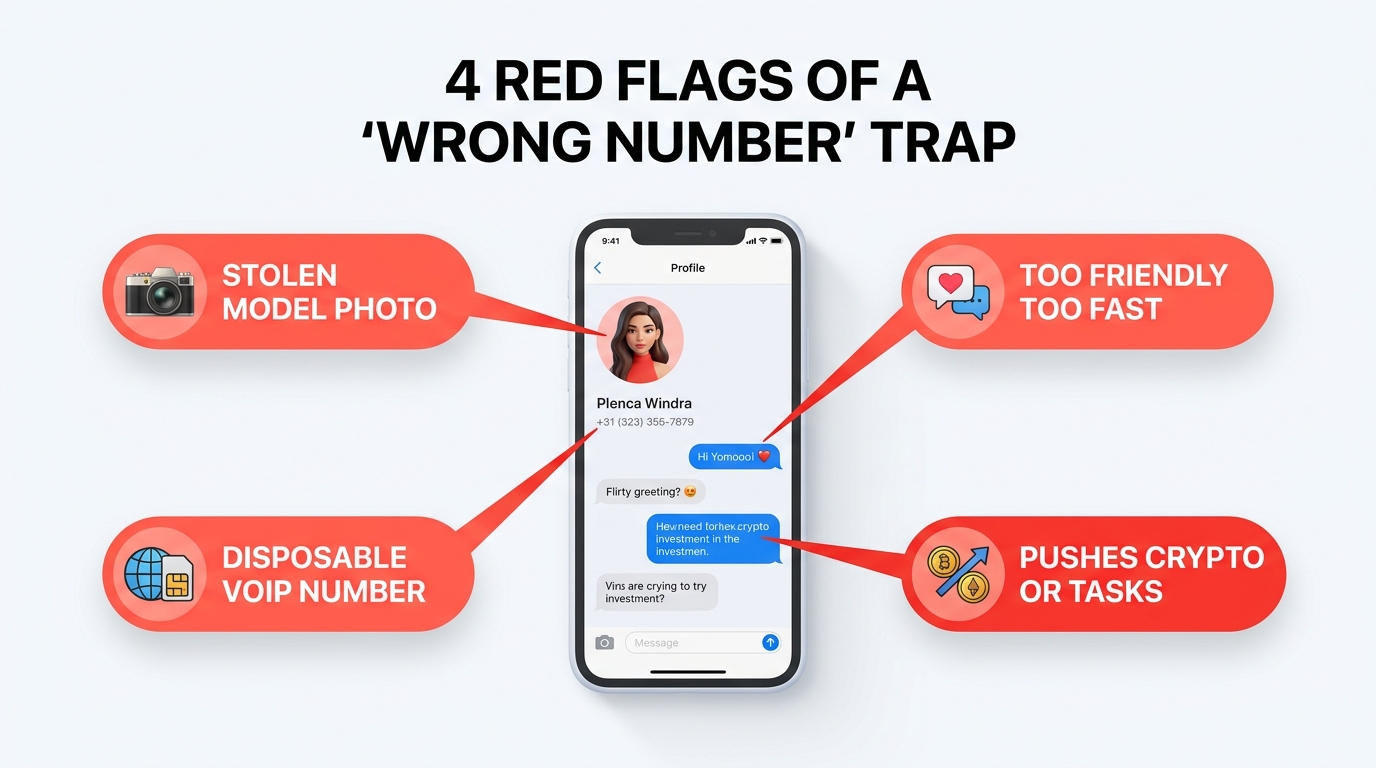
- Real strangers don’t try to befriend wrong numbers: Think about the last time you texted a wrong digit by mistake. You typed “Oops, sorry!” and closed the chat forever. Anyone who pivots from “Is this Dr. Mehta?” to “You seem so kind, what’s your name?” is reading Page 1 of a grooming script.
- Mismatched country codes or disposable VoIP numbers: They claim to run a local studio down the road while messaging from a
+44,+1,+62,+855, or virtual internet line—always excused as their “old travel roaming SIM.” - Polished “aspirational” solo photos: Never messy group photos—always magazine-clean shots at airport lounges, golf ranges, fine-dining tables, or luxury gyms.
- Switching platforms or pushing unlisted apps: Inevitably, they nudge you toward Telegram, a secondary “private WhatsApp,” or a custom trading/task URL that isn’t a regulated broker.
What You Should Do Instead: The Zero-Word Rule
Resist the urge to joke or “troll” the scammer back. Even sending a funny meme tells Stage 1’s bot that your phone number belongs to an active human who reads and replies to unknown WhatsApp messages—putting your number straight onto resale lists for five other scam centers.
- Send zero words back: If a real human genuinely typed the wrong digit for their plumber or vet, they will realize it when nobody answers.
- Tap “Block & Report” immediately: Reporting forwards recent message metadata to WhatsApp’s anti-abuse team, helping burn the scammer’s SIM before it traps someone’s unsuspecting parent.
- Verify unfamiliar contacts silently first: Unsure whether an unknown sender is a legitimate WhatsApp Business account or a disposable internet number? Check the digits quietly on a free WhatsApp Number Checker or Reverse Phone Lookup to inspect its country, carrier, and line type without ever sending a reply.