Quick Takeaway: Dictating your personal mobile number at a store register for a “digital bill” or ₹20 loyalty discount rarely stays inside that shop. Cloud POS software links your digits to your shopping basket, syncs hashed profiles with ad networks and partners, and turns your primary bank-linked number into a permanent magnet for spam calls.
Watch how carefully we guard our passwords, PINs, and ID cards—then watch what happens the instant we reach the front of a checkout queue.
“Mobile number, sir? For the digital bill and loyalty points.”
Without thinking twice—in front of five strangers holding shopping baskets right behind us—we rattle off our personal 10-digit phone number out loud just to save ₹20 ($2) on laundry detergent or avoid a tiny strip of receipt paper.
Pharmacy counters. Coffee chains. Clothing stores. Salon receptions. Airport Wi-Fi portals. Restaurant waitlists.
It feels completely harmless. After all, what could a supermarket possibly do with ten digits?
Plenty. Because in 2026, your mobile number isn’t just a telephone line anymore—it acts as an unchangeable digital social security number that stitches your offline purchases and online identity into a single searchable profile.
Follow the 30-Day Domino Trail of Your 10 Digits
When the cashier punches your phone number into that glowing touchscreen register, it almost never stays inside that neighborhood store. Modern retail chains rent third-party cloud POS (Point-of-Sale) and CRM platforms engineered specifically to turn anonymous walk-in shoppers into trackable marketing profiles.
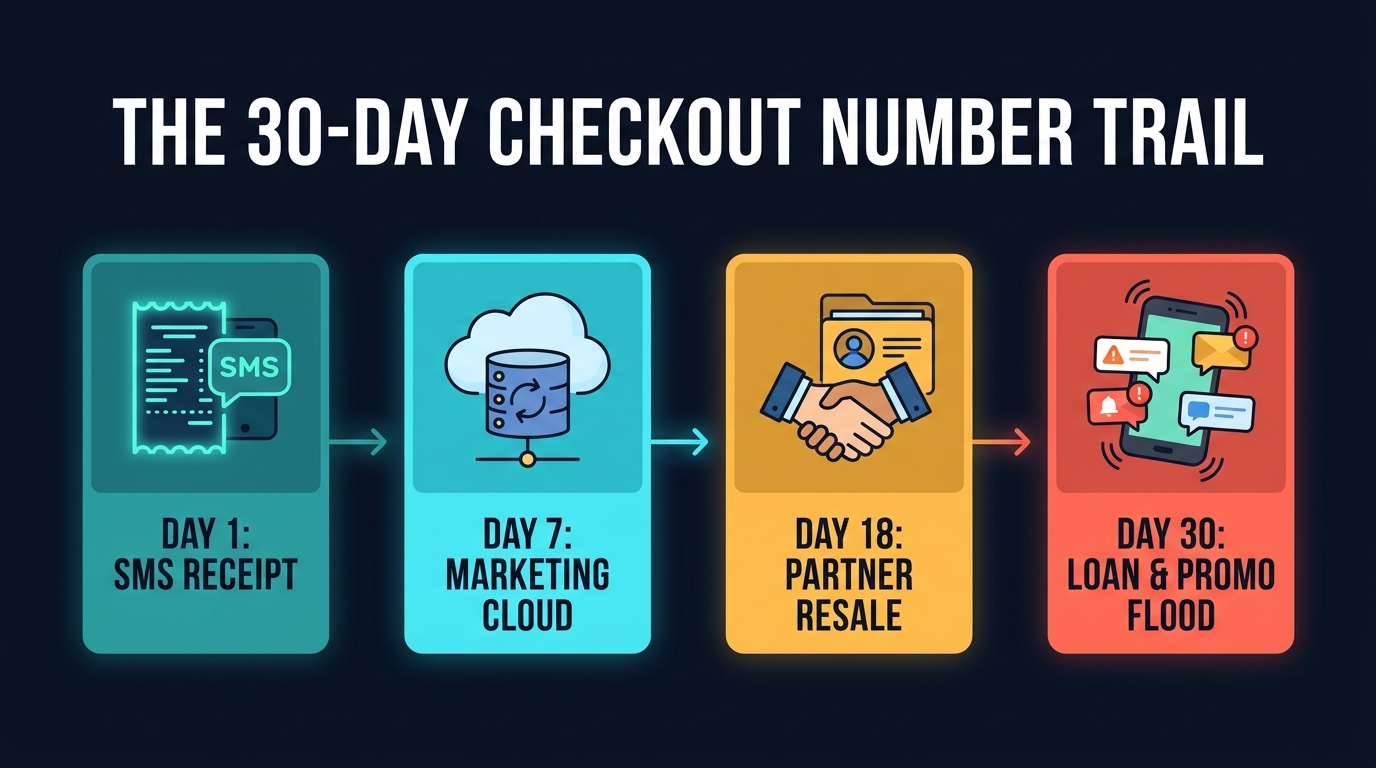
- Day 1 — The “Paperless Receipt” Hook: Seconds after paying, an SMS link arrives to view your e-bill. Tapping that link verifies your number is active, captures your smartphone browser and IP region, and buries fine-print consent for “partner promotional offers” below the receipt total.
- Day 7 — Basket Profiling in the Cloud: Your 10 digits are now permanently paired with what you bought, how you paid, and which neighborhood you shop in. Bought diapers? Tagged
New Parent. Bought protein isolate and running socks on a platinum credit card? TaggedAffluent Buyer. - Day 18 — Data Clean-Rooms & Vendor Leaks: Retail clouds match hashed phone numbers against ad networks and affiliate partners so lenders, insurers, and brands can target you across SMS, WhatsApp, and social feeds. Worse still, smaller retail SaaS vendors frequently suffer database breaches that dump millions of phone-and-basket records onto broker forums.
- Day 30 — The Mystery Spam Wave: Three weeks after buying vitamins at a pharmacy, your phone starts buzzing with health-insurance telemarketers, pre-approved personal loans, and apartment launches—and you wonder, “How did they get my number?” You handed it over at Counter #3.
Why Your Phone Number Is a Dangerous “Master Skeleton Key”
You can reset a leaked password in ten seconds. You can replace a compromised credit card in two days. Try changing the primary mobile number you have used for ten years—it is hardwired into every bank OTP, tax filing, WhatsApp group, and medical portal you own.
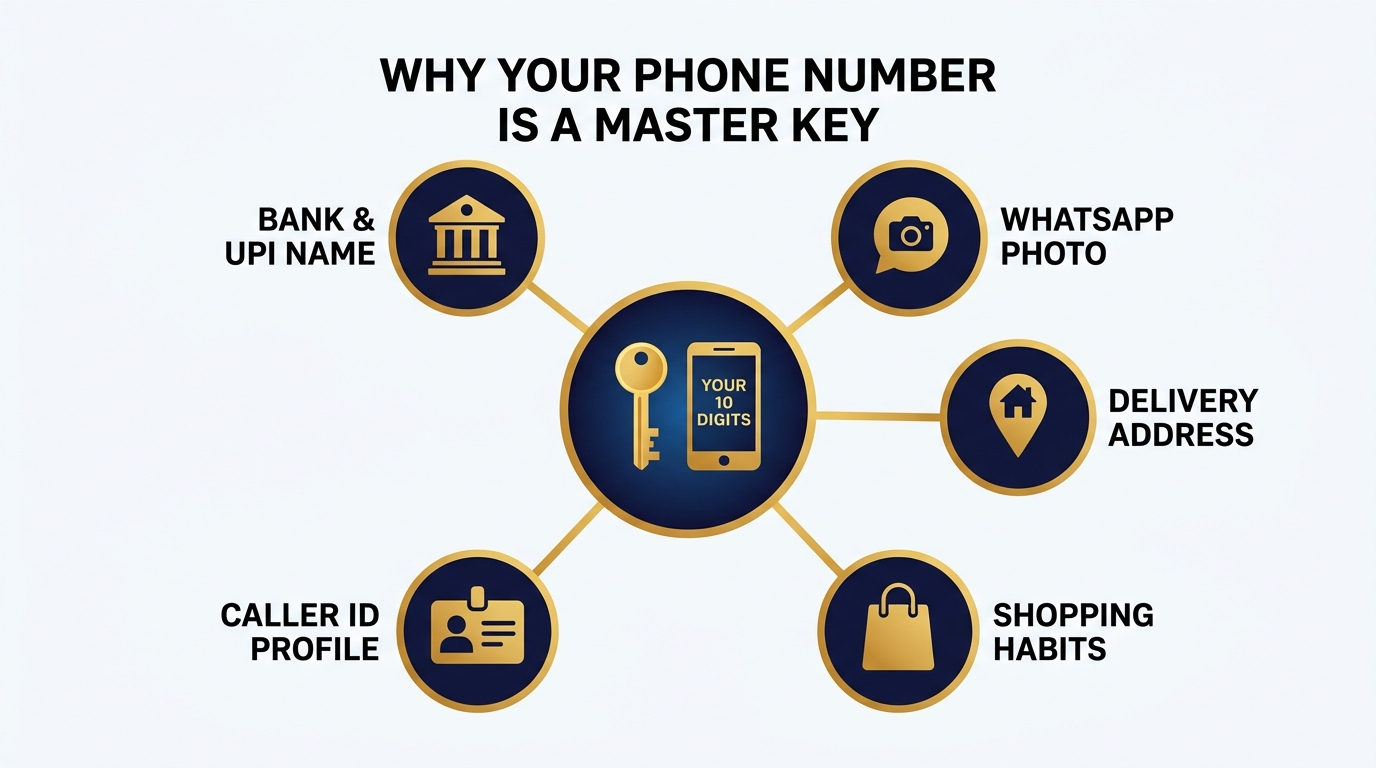
- Your Real Banking Name: Entering a phone number into many instant-payment / UPI apps immediately previews the account holder’s registered legal name before a single rupee or dollar is sent.
- Your Face & Family: Unless you restricted WhatsApp privacy settings (Settings → Privacy → Profile Photo → My Contacts), any stranger or scraper saving your number sees your photo instantly.
- Crowdsourced Caller-ID Tags: Public address-book databases often reveal your employer, title, or nickname uploaded from someone else’s phone contacts.
- Old Delivery Addresses: Data brokers merge fresh store-checkout numbers with older e-commerce breaches to attach physical home addresses to active mobile lines.
How to Shop in Peace: The “2-Number Privacy Rule”
First, remember a polite superpower most shoppers forget: in nearly every physical store, giving your phone number is 100% optional.
Next time a cashier asks “Mobile number?”, smile warmly and say: “No thank you, a printed bill is fine—please skip the number.” Almost every POS terminal has a one-tap Walk-In / Skip button the staff can press instantly.
And for apps, couriers, and public Wi-Fi portals that genuinely force an OTP, adopt the Vault vs. Street Number habit:
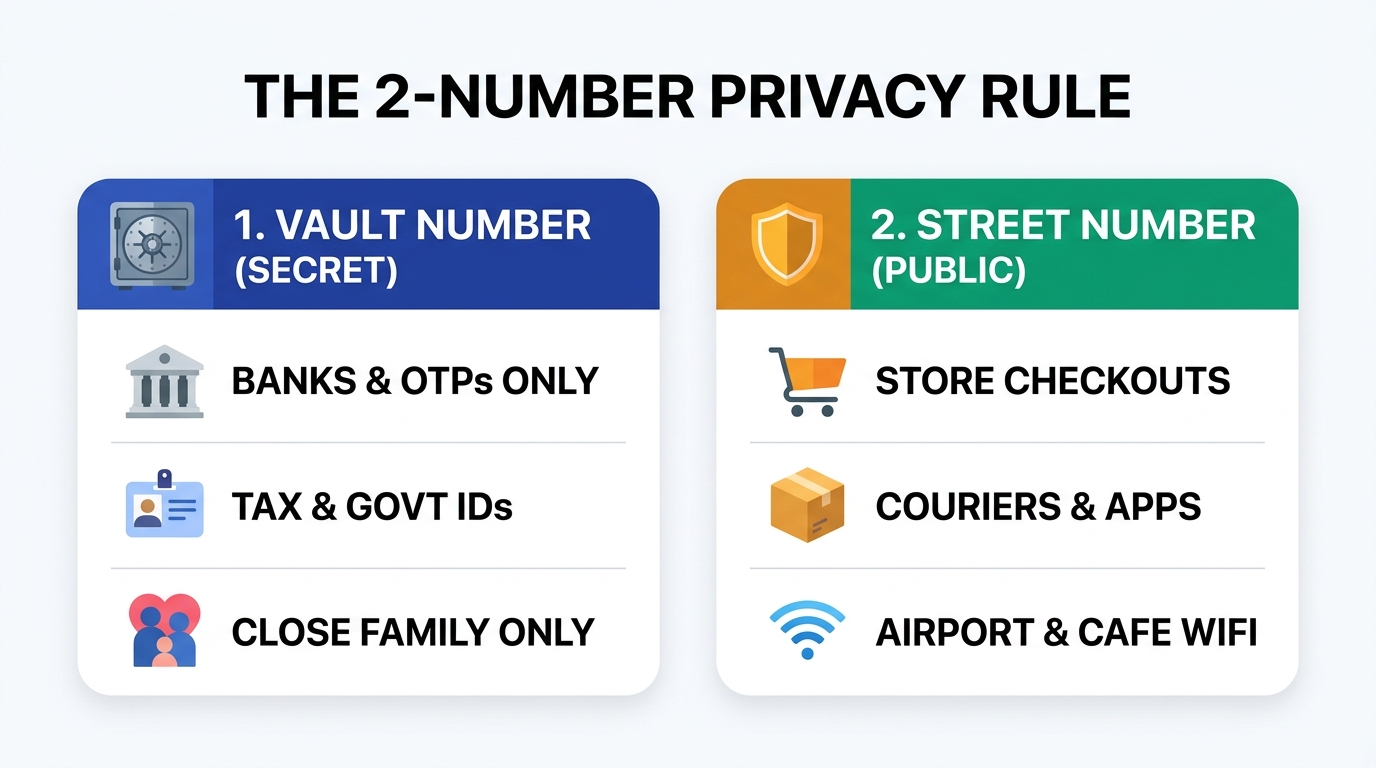
- 1. Your “Vault Number” (Top Secret): Lives privately on SIM Slot 1 / eSIM. Only three groups ever receive it: your banks, government/tax IDs, and close family. Never type it into a store tablet, raffle form, or café Wi-Fi portal.
- 2. Your “Street Number” (Public Shield): An inexpensive secondary prepaid SIM or eSIM kept permanently on Silence Unknown Callers. Give this number to supermarkets, gyms, food deliveries, and shopping websites guilt-free.
Curious what your own digits already reveal? Run a quick self-audit with a free Mobile Number & Caller Lookup and switch your WhatsApp profile photo visibility to My Contacts—two minutes today spares you years of mystery spam calls tomorrow.